Startup Packaging Budget Planning
Why Startups Fail at Packaging Budget Planning
One of the most common conversations we have at BoxCraft starts like this:
“We want a premium rigid box in the ₹100–150 range.”
But when we begin discussing the actual requirements — magnets, velvet lining, foil stamping, inserts, board thickness, textures, quantities, and finishing — it becomes clear that the packaging budget was never realistically calculated in the first place.
This is extremely common among early-stage startups.
Most founders decide packaging budgets emotionally, not structurally.
And unfortunately, packaging manufacturing does not work that way.
Packaging Is Not Just a Box : Startup Packaging Budget Planning
Many startups see packaging as an accessory.
But in reality, packaging directly affects:
- Product perception
- Brand trust
- Unboxing experience
- Social sharing potential
- Customer retention
- Premium positioning
- Gift value perception
A luxury product inside weak packaging creates confusion.
At the same time, overspending on packaging without understanding margins can damage profitability.
Good packaging is not about spending more.
It is about spending intelligently.
The Biggest Packaging Mistake Startups Make
The biggest mistake is deciding the box price before understanding the structure.
Founders often say things like:
- “We need this below ₹80.”
- “Can you make this premium but affordable?”
- “We saw something similar online.”
- “We only need 100 pieces.”
But custom packaging pricing depends on multiple factors:
- Box dimensions
- Quantity (MOQ)
- Material thickness
- Rigid board quality
- Printing process
- Foiling
- Magnetic closures
- Inserts
- Fabric or velvet lining
- Lamination
- Manual finishing
- Assembly complexity
Even a small change in structure can significantly affect pricing.
MOQ Reality in Custom Packaging
Many premium rigid boxes become commercially viable only at higher quantities.
This is because setup costs are distributed across production volume.
For example:
- Tooling
- Printing setup
- Foil setup
- Die cutting
- Manual assembly
- Sampling
- Material procurement
A design that works at 5,000 units may become unrealistic at 100 units.
This is why packaging development should begin with feasibility discussions — not random target pricing.
Why Comparing Packaging Prices Online Creates Confusion
One of the biggest problems startups face today is comparing packaging prices randomly across suppliers, marketplaces, and social media references.
A rigid box shown online may appear visually similar to another box, but the actual manufacturing cost can vary dramatically depending on:
- board thickness
- paper quality
- insert structure
- magnet quality
- printing process
- finishing precision
- manual labor involvement
- quantity being produced
This is why experienced manufacturers rarely provide accurate pricing without understanding the complete packaging structure first.
In many cases, startups compare:
- luxury rigid boxes,
- folding cartons,
- handmade boxes,
- and mass-produced packaging
as if they belong to the same manufacturing category.
But they do not.
At BoxCraft, many feasibility discussions begin by helping brands understand the difference between visual inspiration and manufacturing reality.
Packaging Cost Should Match Product Positioning
A product selling for ₹500 cannot usually sustain ₹250 packaging.
Similarly, a premium product priced at ₹8,000 may actually require stronger packaging investment to justify its positioning.
Packaging should be planned based on:
- Selling price
- Brand positioning
- Customer expectation
- Shipping method
- Retail environment
- Unboxing experience
- Repeat purchase potential
There is no universal “correct packaging price.”
The right budget depends on the business model.
Luxury Packaging Is a Different Industry
Many startups underestimate how different luxury packaging manufacturing actually is.
Premium rigid boxes involve:
- Precision wrapping
- Manual craftsmanship
- Specialty papers
- Structural strength
- High-end finishing
- Attention to alignment and detailing
Luxury packaging is not comparable to mass-market folding cartons.
The production process, labor involvement, and finishing expectations are entirely different.
Packaging Development Should Begin Before Final Branding
Many startups finalize:
- logo,
- product labels,
- social media branding,
- and even website design
before understanding packaging production limitations.
This often creates major issues later during manufacturing.
For example:
- artwork proportions may not fit correctly,
- inserts may require structural changes,
- foil placement may become impractical,
- or the packaging may exceed the target commercial budget.
Professional packaging development should ideally begin alongside branding discussions — not after everything is finalized.
This helps brands create packaging systems that are visually strong, structurally feasible, and commercially realistic.
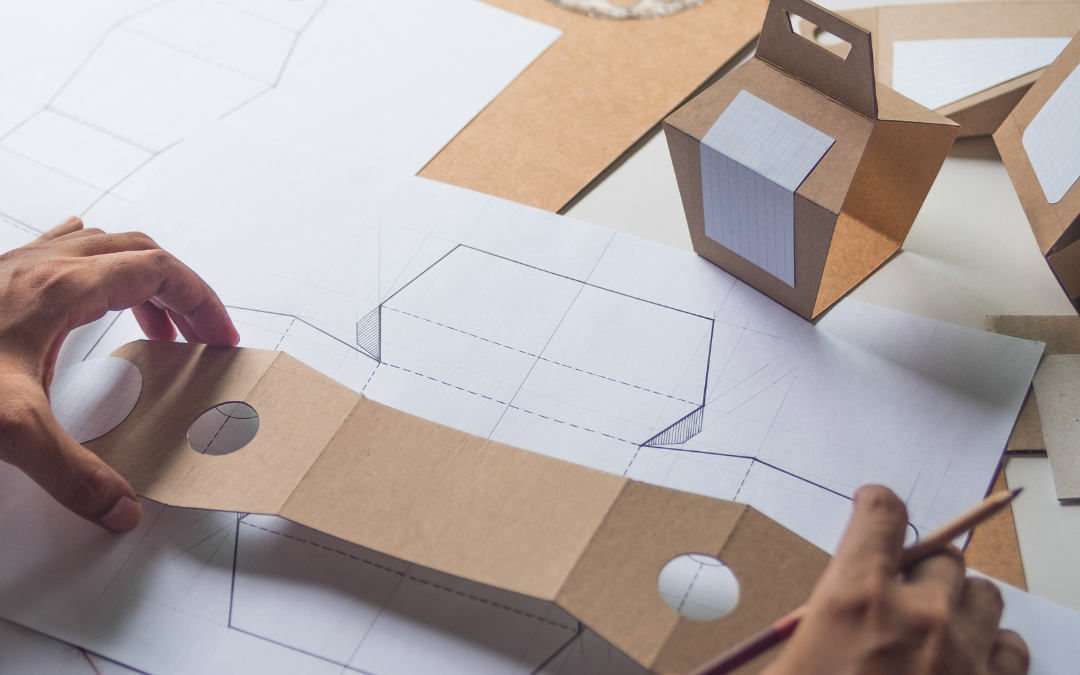
Why Prototype Development Matters
A packaging prototype helps identify:
- Structural issues
- Opening experience
- Material feel
- Magnet strength
- Insert fitting
- Product protection
- Visual balance
Without prototyping, startups often move directly into production and later realize the packaging does not perform as expected.
Good packaging development reduces expensive mistakes later.
A Better Way to Plan Packaging
Instead of asking:
“Can this be done in ₹100?”
Start by asking:
- What experience do we want customers to have?
- What is the product positioning?
- Is this mass market or premium?
- What quantity are we targeting?
- What finishing elements are truly necessary?
- What is commercially feasible?
This approach creates better decisions and more realistic outcomes.
The Difference Between Sampling and Mass Production
Many packaging concepts look achievable during reference discussions but behave very differently during actual production.
A packaging prototype may involve:
- manual adjustments,
- temporary assembly methods,
- or premium finishing techniques
that become commercially difficult during larger production runs.
This is why structural testing, sampling, and production planning are critical before scaling packaging systems commercially.
Final Thoughts
Custom packaging is not only about appearance.
It is about balancing:
- branding,
- manufacturing feasibility,
- customer psychology,
- and business economics.
The earlier startups understand this, the better their packaging decisions become.
At BoxCraft, we work with startups and growing brands to develop realistic, structurally feasible packaging systems that align with both brand positioning and manufacturing realities.
What affects custom packaging cost the most?
Packaging cost depends on structure, materials, quantity, inserts, finishing, magnets, printing complexity, and manual assembly requirements.
Why are rigid boxes expensive at low quantities?
Rigid boxes involve setup costs, manual labor, and specialized production processes that become more viable at larger quantities.
How should startups decide packaging budgets?
Packaging budgets should be planned according to product positioning, selling price, target audience, and expected customer experience.
Is premium packaging necessary for every product?
No. Packaging should match the product category and business strategy. Some brands benefit more from functional packaging, while others require strong luxury presentation.