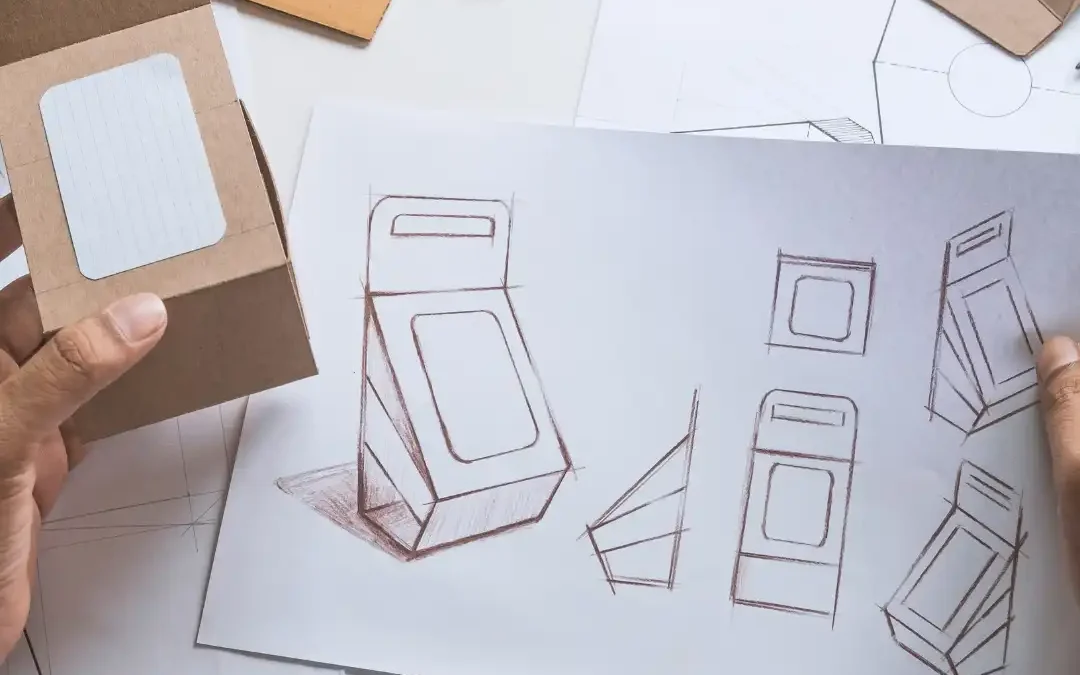
You have the product. You have the brand. You have the references. You may even have 20 AI-generated packaging ideas.
Packaging development can become surprisingly complicated for a founder.
And somehow, you still don’t know what box you should actually make.
That is becoming a surprisingly common problem for founders.
Starting a premium consumer brand is exciting. The product is taking shape, the brand identity is coming together, and then packaging enters the picture.
Suddenly, the founder is collecting references, generating concepts, making PDFs, speaking to packaging vendors, comparing quotations, discussing materials and trying to understand what can actually be manufactured.
A few weeks later, there may be more information — but less clarity.
The problem isn’t a lack of ideas.
The problem is the missing layer between the founder’s vision and the manufacturer.
The founder’s job is to build the business — not become a packaging engineer
A founder should absolutely care about packaging.
They should have a strong opinion about how the product should look, feel and arrive in the customer’s hands.
But there is a difference between having the packaging vision and developing the packaging itself.
The founder’s attention is usually better spent on questions such as:
- Who is the customer?
- What are we selling?
- Why will they choose us?
- What should the brand stand for?
- What is the right price?
- How will we acquire customers?
- How will we fulfil orders?
- How will we grow?
Packaging matters to all of these decisions.
But the founder does not need to become an expert in board grades, structural engineering, inserts, die-making, finishing processes, production tolerances and manufacturing constraints just to make a good packaging decision.
That is where a packaging development partner comes in.
The founder brings the vision, product, customer, positioning and commercial objective.
The development partner works out how that vision can become a practical, manufacturable and commercially sensible packaging solution.
Founder focuses on
Brand
Product
Customer
Sales
Growth
Have the vision.
Set the commercial boundaries.
Make the final decision.But don’t confuse being involved with having to do everything yourself.
AI Has Made the Problem More Visible
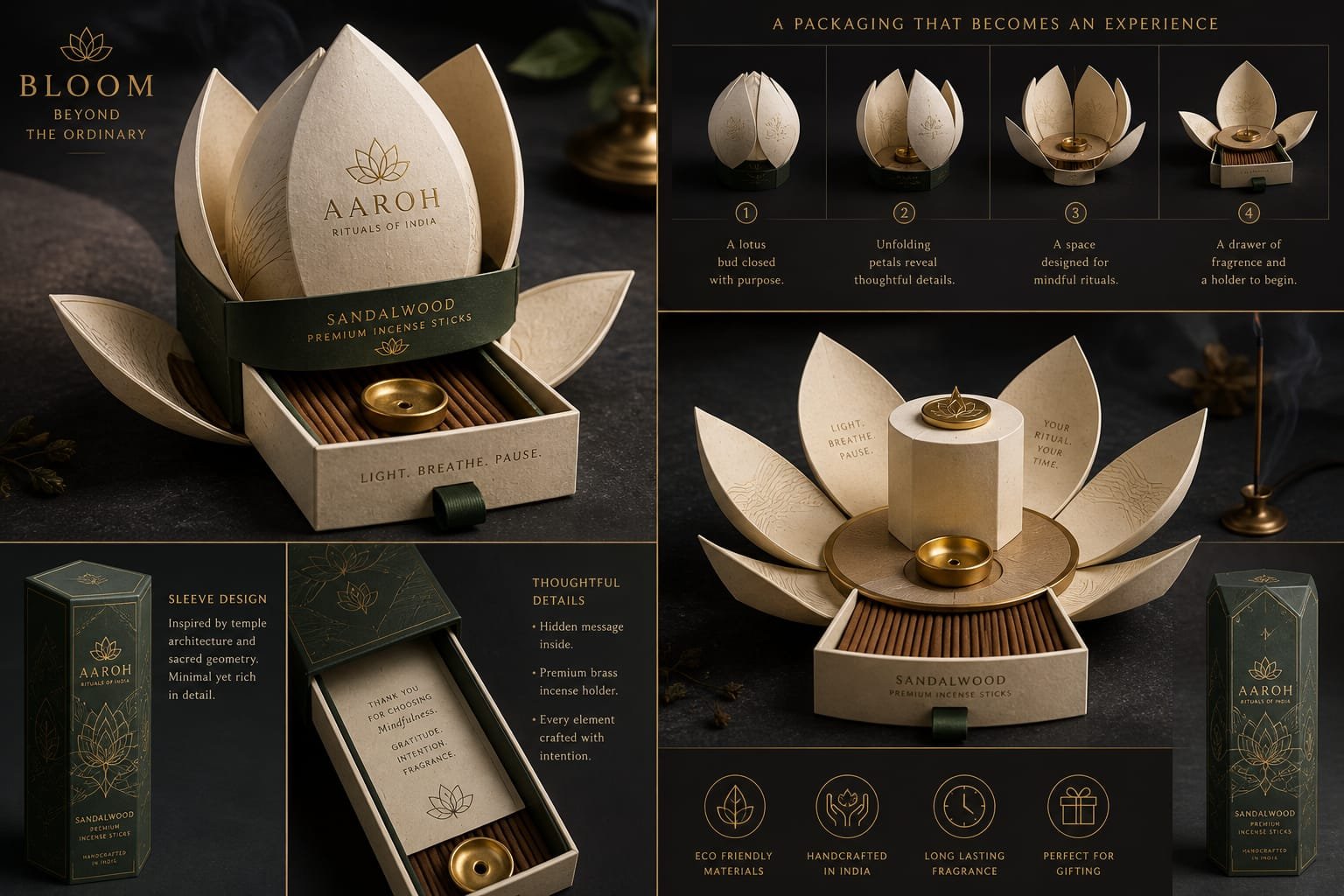
A founder can now generate twenty packaging renders before lunch.
Some will look spectacular.
One may have a drawer.
Another may have a magnetic lid.
Another may have a circular structure.
Another may have multiple layers.
Another may have gold foil, embossing, ribbons and a beautiful insert.
Then come the PDFs.
Three concepts.
Five concepts.
Twenty references.
It can feel like enormous progress has been made.
But visualisation is not development.
A render can show you what a packaging idea could look like.
It cannot tell you whether the structure is practical, whether the insert will hold the product securely, whether the box can be produced consistently, whether it will survive shipping, or whether the final cost makes sense.
AI has made it easier to create packaging ideas.
It has not made it easier to decide which packaging idea is worth developing.
Then the Vendor Gets the Brief
The founder has collected the references.
The AI renders are ready.
The PDF is ready.
The dimensions are somewhere in the document.
And now everything is sent to the packaging vendor.
Usually, the request sounds something like:
“Here are some references. We want something premium, distinctive and different. Please suggest what is possible and give us pricing.”
And now the vendor has to interpret the problem.
One vendor suggests a rigid box.
Another suggests a folding carton.
One says the drawer structure is possible.
Another says it will be expensive.
One quotes ₹180.
Another quotes ₹240.
Another quotes ₹310.
Someone says the structure isn’t practical.
Someone else says, “Yes, we can make it.”
And the founder is left trying to decide who is right.
Then comes the real problem
The founder is not necessarily equipped to evaluate the answers.
Not because they aren’t capable.
Because packaging development is a specialised discipline.
The founder may know exactly how they want the brand to feel.
They may know what their customer should experience.
They may even know which reference they prefer.
But they may not know whether the construction being proposed is:
- structurally appropriate
- commercially viable
- scalable
- suitable for the product
- suitable for shipping
- efficient to manufacture
- worth the tooling investment
So the decision can quietly become:
“I like this one.”
or:
“This vendor is cheaper.”
Neither is necessarily a packaging development decision.
A quotation tells you what a vendor will charge for a solution.
It does not necessarily tell you whether it is the right solution.
More Vendors Can Mean More Confusion
There is a natural assumption when developing packaging:
More vendors = more options = a better decision.
It sounds logical.
But if the packaging problem hasn’t been properly defined, adding more vendors can simply produce more interpretations of the same unclear brief.
Five vendors may give you five different structures.
Five structures may produce five different cost calculations.
Five cost calculations may lead to five different opinions about what is “possible.”
And now the founder is expected to work out who is right.
5 vendors
↓
5 interpretations
↓
5 structures
↓
5 prices
↓
5 opinions
And the founder is still trying to decide what to make.
The founder started by wanting to make one packaging decision.
Instead, they have created a packaging committee.
And the founder is now the committee chairman.
They are comparing structures they may not fully understand, negotiating prices they cannot properly benchmark, and trying to determine whether a vendor’s “not possible” actually means technically impossible — or simply not practical for that particular vendor.
This is where valuable time starts disappearing.
And the more startups launch, the more this problem multiplies.
The goal isn’t to collect more packaging opinions.
The goal is to arrive at a packaging decision that has already been properly thought through.
The Missing Layer
There should be a layer between:
Founder → Packaging Manufacturer
That layer is packaging development — the process of translating the founder’s vision into a practical, manufacturable packaging solution.
The founder brings the vision.
The manufacturer brings production capability.
The missing piece is someone who can translate one into the other.
THE FOUNDER
Brand vision
Product
Customer
Positioning
Target price
Business objective
↓
PACKAGING DEVELOPMENT
Structure
Materials
Feasibility
Costing
Prototyping
Testing
↓
THE MANUFACTURER
Tooling
Production
Assembly
Finishing
Quality
Scale
A packaging development partner looks at the entire problem before asking a manufacturer to produce it.
Is the structure appropriate for the product?
Is the experience right for the brand?
Is the material appropriate?
Can the insert be manufactured reliably?
Can the box survive handling and shipping?
Can the construction scale?
What will happen to the cost at different quantities?
What needs tooling?
What can be simplified without losing the intended experience?
And perhaps most importantly:
Is this actually the right packaging solution — or simply the most attractive idea on the page?
That is the layer founders often don’t realise they are missing.
The manufacturer should not have to figure out what your packaging should be.
And the founder should not have to become the manufacturer.
When that layer is present, the conversation with the manufacturer changes.
Instead of:
“Can you make something like this?”
the conversation becomes:
“This is the packaging requirement. These are the commercial boundaries. These are the structural directions we have evaluated. Now let’s determine the best way to manufacture it.”
That is a much healthier starting point for production.
So What Does Packaging Development Actually Involve?
Packaging development is not simply choosing a box style.
It is the process of taking a product, a brand vision and a commercial requirement — and working out how those things can become a packaging solution that is desirable, practical and manufacturable.
That means looking at several things together.
Good packaging development brings these decisions together before production begins.
1. Start With the Product
What is going inside the box?
How fragile is it?
How is it handled?
Does it need individual cavities, a tray, a divider or cushioning?
Will the customer carry it, store it or ship it?
A beautiful structure that doesn’t protect or present the product properly is not a successful packaging solution.
2. Start With the Commercial Reality
Packaging exists inside a business.
The product has a selling price.
There is a target packaging cost.
There is an expected quantity.
There may be shipping constraints.
There may be different quantities for launch, regular orders and festive gifting.
These aren’t details to be considered after the design.
They should influence the design from the beginning.
3. Develop the Structure
This is where packaging design becomes packaging development.
A drawer may be appropriate.
A hinged box may be better.
A sleeve may achieve the same visual effect with less complexity.
A two-layer construction may solve a combination-pack problem.
A completely different structure may create the experience the brand is looking for.
The reference image is only a starting point.
The job is to discover what works best for the actual product and business.
4. Evaluate Materials and Finishes
The same structure can feel completely different depending on what it is made from and how it is finished.
Board selection.
Paper or fabric wrapping.
Texture.
Foil.
Embossing.
Printing.
Magnets.
Ribbons.
Trays and inserts.
These aren’t simply decorative decisions.
They affect cost, manufacturability, durability and the customer’s experience.
5. Check Feasibility Before Falling in Love With the Render
This is where many packaging projects go wrong.
Something can look fantastic in a presentation and become problematic the moment someone tries to manufacture it.
Can the structure actually be made?
Can it be assembled efficiently?
Can the insert be produced accurately?
Can the materials be sourced consistently?
Can the finished box tolerate handling?
Can the same construction be produced at the required quantity?
Feasibility is not the enemy of creativity.
It is what allows creativity to reach production.
6. Prototype the Actual Packaging
Eventually, the render has to become an object.
A prototype lets you examine things that an image cannot:
How does it open?
How does it feel?
Does the product fit correctly?
Does the insert work?
Does the structure feel stable?
Does the proportion look right in the hand?
Does the opening experience match the brand promise?
This is where an idea starts becoming a packaging product rather than a visual concept.
7. Prepare It for Manufacturing
Once the structure and prototype have been evaluated, the packaging can move towards production.
Dimensions can be finalised.
Materials can be confirmed.
Finishing can be specified.
Tooling requirements can be understood.
Manufacturing processes can be discussed.
Quantities and costing can be evaluated.
The manufacturer is no longer being asked to invent the solution from a reference image.
They are being asked to produce a developed solution.
That is the difference between packaging design and packaging development.
Design asks:
“What could this look like?”
Development asks:
“How should this actually work?”
The Cost Isn’t Just the Box
The obvious cost of packaging is the quotation sitting in front of you.
For a startup, packaging development is therefore not simply a design expense. It is part of reducing uncertainty before production.
₹150.
₹250.
₹500.
₹1,000.
But that isn’t the only cost.
When packaging development is left entirely to the founder, there is another bill being paid.
Time.
Time spent searching for references.
Time spent generating concepts.
Time spent making presentations.
Time spent explaining the same requirement to different vendors.
Time spent comparing quotations.
Time spent revising structures that were never properly evaluated in the first place.
And sometimes, after all that time, the founder still hears:
“This isn’t possible at that price.”
Or:
“We can manufacture it, but the MOQ will be much higher.”
Or:
“The structure needs to change.”
Or:
“The tooling will cost extra.”
At that point, the project can go back to the beginning.
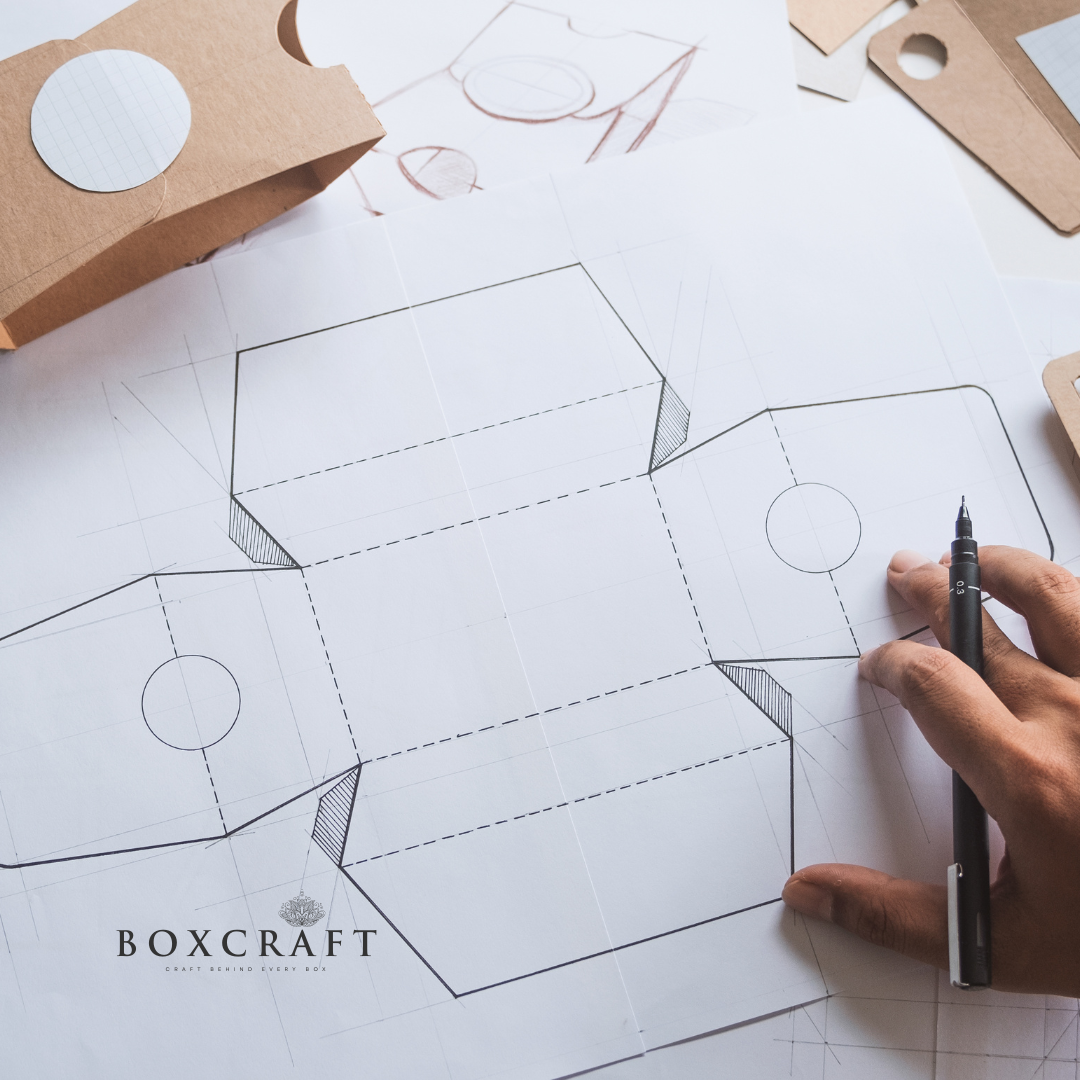
The cheapest packaging decision is not always the one with the lowest quotation.
Sometimes the expensive decision is the one that took three weeks to discover was wrong.
For a startup, this matters even more.
Cash is limited.
Time is limited.
The launch window is limited.
The founder’s attention is limited.
Packaging development should reduce uncertainty — not create another full-time job for the founder.
What a Founder Should Actually Bring to the Table
You Don’t Need to Bring the Answer. Bring the Right Information.
A founder doesn’t need to arrive with a finished packaging design.
In fact, sometimes arriving with too many fixed packaging ideas can make the development process harder.
What you need to bring is the business context.
Your product
What is going inside the packaging?
What are its dimensions, weight, fragility and handling requirements?
Your customer
Who is buying it?
Is it for everyday purchase, premium gifting, weddings, corporate gifting, retail or e-commerce?
Your brand
What should the packaging communicate?
What should the customer feel when they receive and open it?
Your commercial reality
What is the product selling price?
What packaging cost are you trying to achieve?
What quantities do you expect?
Your distribution
Will the packaging be handed over at a store?
Delivered locally?
Shipped across India?
Exported?
The answer can completely change the packaging requirement.
Your timeline
When does the packaging need to be ready?
A structure that requires extensive development and tooling may not be appropriate for a launch happening in three weeks.
Your references
Bring them.
They are useful.
But treat them as references, not instructions.
A reference tells a packaging development partner what caught your attention.
It doesn’t necessarily tell you what should be manufactured.
You don’t need to know how the box should be made.
You need to know what the box needs to achieve.
This is why packaging development for startups often begins with questions rather than packaging drawings.
Stop Asking “Who Can Make This?”
When founders begin looking for packaging, the first question is often:
“Who can make this?”
That is understandable.
But it is usually not the first question that needs answering.
A better starting point is:
“What packaging solution makes sense for this product, this customer, this quantity and this target cost?”
Once that question has been answered, finding the right manufacturer becomes much easier.
The packaging manufacturer is then solving a defined production problem, rather than trying to reverse-engineer a business requirement from a collection of images and references.
That is where packaging development earns its place.
Don’t start with the factory.
Start with the problem.
Develop the solution.
Then take it to production.
This Is Where BoxCraft Comes In
At BoxCraft, we see packaging development as the layer between brand ambition and manufacturing reality.
Our role is to help brands move through packaging development before committing to manufacturing.
We work with brands that may already have a product, a brand identity and plenty of inspiration — but need help turning those inputs into packaging that can actually be developed, prototyped and produced.
That can mean starting with a very clear brief.
Or it can mean starting with:
“We know what we want the customer to experience, but we don’t know what the box should be.”
Both are valid starting points.
The work can involve structural development, material selection, packaging feasibility, costing considerations, prototyping and manufacturing coordination — depending on what the project requires.
The objective is not to make the founder less involved.
It is to make the founder’s involvement more useful.
You remain the person deciding what the brand should be.
We help work through how the packaging can make that vision real.
You bring the vision.
We help develop the packaging.
The manufacturer makes it.
If You're At This Stage With Your Brand
If you have a product, a brand direction and a packaging requirement — but find yourself spending more time talking to vendors than building the business — it may be time to step back from the manufacturing conversation.
You don’t necessarily need another quotation.
You may need to develop the packaging first.
BoxCraft Packaging Advisory is designed for brands that need to work through the packaging problem before committing to production.
We can help evaluate the requirement, identify the development path and determine what needs to be solved before manufacturing begins.